
Continuing Education
2026 Annual Meeting offers continuing education credits

Continuing Education
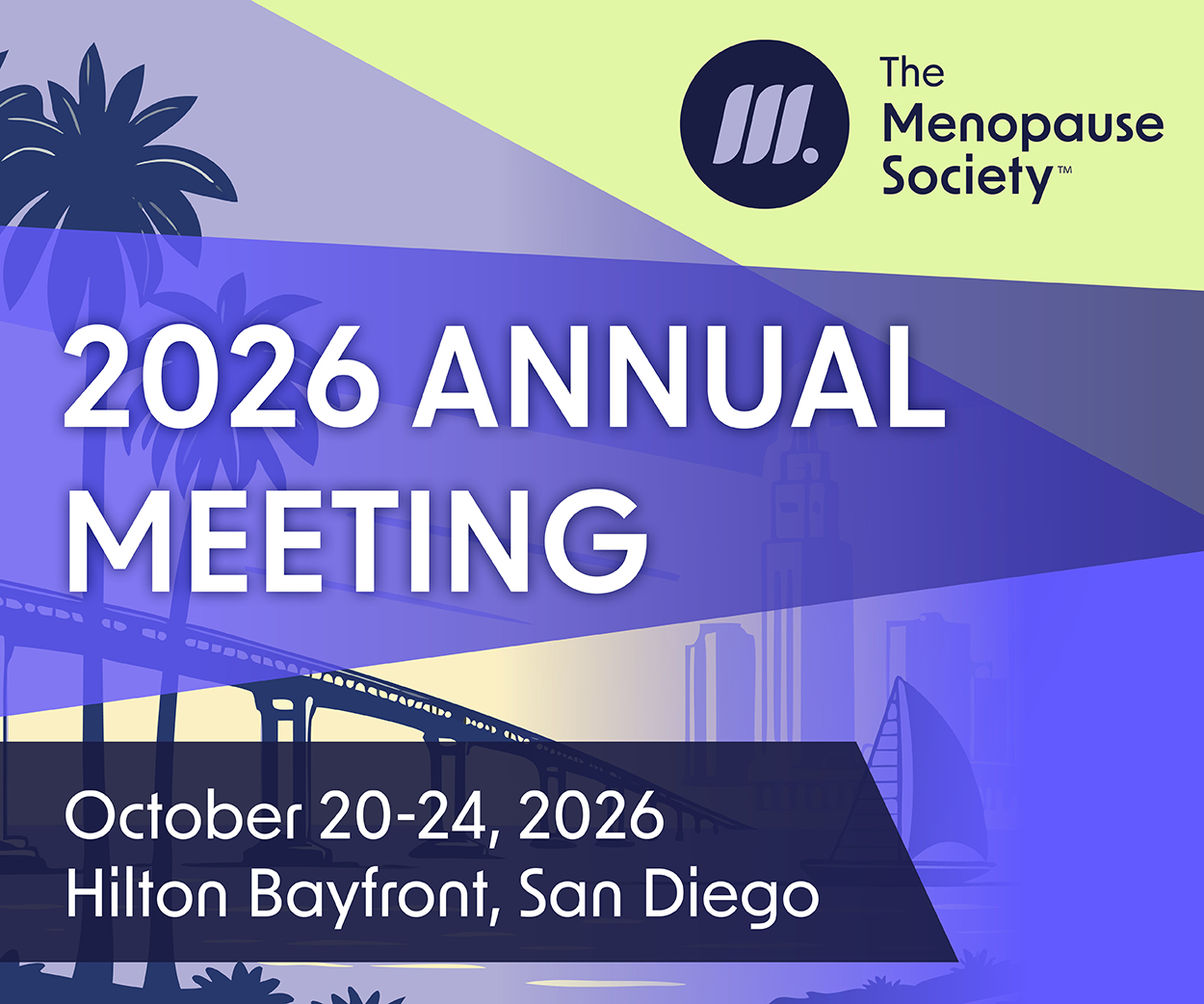
The 2026 Annual Meeting Main Program, Opening Symposium, and Menopause 101 and Bone Health 101 courses offer opportunities to earn continuing education credits or certificates of participation by attending the events in-person or by participating in the virtual offering. For nurses and other learners who need to report contact hours of pharmacotherapeutic education, there will be an option to earn pharmacotherapeutic credits.
The Menopause Society is accredited by the Accreditation Council for Continuing Medical Education (ACCME) to provide continuing medical education for physicians.
Learning Objectives
Menopause 101 Course
By participating in this activity, attendees should be able to
- Review menopause definitions, terminology, and physiology to define menopause stages and recognize symptoms prevalent during each stage.
- Understand vasomotor symptom physiology, causes not related to menopause, and the appropriate treatment options.
- Discuss the physiology of genitourinary syndrome of menopause, identify other causes of vulvovaginal discomfort, and review the treatment options.
- Define hypoactive sexual desire disorder and understand normal age-related changes in desire.
- Describe cognitive changes that occur during midlife differentiating between normal brain fog and dementia.
- Consider cardiometabolic changes that occur with the menopause transition and review the modifiable risk factors, lifestyle interventions, and preventive strategies.
- Review the epidemiology and prevalence of mood disturbances during the menopause transition and identify risk factors during midlife.
- Differentiate night sweats due to menopause versus other causes and evaluate the different treatment approaches.
Bone Health 101 Course
By participating in this activity, attendees should be able to
- Review the bone loss within the menopause transition.
- Outline the screening options for osteopenia and osteoporosis taking into consideration who, when, and how.
- Discuss how patients can help prevent developing osteopenia, osteoporosis, or fractures.
- Understand the treatment options for patients with osteopenia, osteoporosis, or fractures.
- Consider the side effects of antiosteoporosis treatment options.
- Describe the role of exercise, weighted vest, vibrating machines, and other treatment options in optimizing bone health.
- Recognize how to reduce osteoporosis or fracture-related health disparities.
Annual Meeting Main Program and Opening Symposium
By participating in this activity, attendees should be able to
- Review the evidence-based lifestyle options across the menopause pillars.
- Appreciate the multidisciplinary approach to menopause care across the cancer continuum.
- Understand estrogen avoidance in cardiovascular health, bone health, and in comparison, to other treatment options.
- Recognize mood disorders, suicide risk, and psychological wellbeing during the menopause transition.
- Consider evidence-based care for skin and hair changes in menopause and how the research translates to clinical practice.
- Describe cardiovascular risk, lipid management, sex-based differences at menopause, and the guidelines for women’s cardiovascular care.
- Understand and evaluate abnormal uterine bleeding, overactive bladder, and chronic pelvic and sexual pain from perimenopause to postmenopause.
- Review the emerging and established pharmacologies in perimenopause and menopause management beyond hormones.
- Become familiar with desire, arousal, and the pelvic floor across the menopause transition.
- Evaluate the science of sleep across the menopause continuum including the consequences of sleep disturbance and recognizing and managing sleep disorders.
In-Person Continuing Medical Education Credits and Pharmacotherapeutic Hours
Menopause 101 Course—October 20, 2026—1:00 PM–5:30 PM
The Menopause Society designates this live activity for a maximum of 4.0 AMA PRA Category 1 Credit(s)™. Physicians should claim only the credit commensurate with the extent of their participation in the activity.
Other healthcare professionals who participate in this activity will receive a certificate of participation. A maximum of 2.0 pharmacotherapeutic hours are available.
Bone Health 101 Course—October 20, 2026—1:00 PM–5:30 PM
The Menopause Society designates this live activity for a maximum of 4.0 AMA PRA Category 1 Credit(s)™. Physicians should claim only the credit commensurate with the extent of their participation in the activity.
Other healthcare professionals who participate in this activity will receive a certificate of participation.
Opening Symposium and Main Program—October 21-24, 2026
The Menopause Society designates this live activity for a maximum of 22.25 AMA PRA Category 1 Credit(s)™. Physicians should claim only the credit commensurate with the extent of their participation in the activity.
Other healthcare professionals who participate in this activity will receive a certificate of participation. A maximum of 5.5 pharmacotherapeutic hours are available.
Virtual Continuing Medical Education Credits and Pharmacotherapeutic Hours
Menopause 101 Course
The Menopause Society designates this internet enduring activity for a maximum of 4.0 AMA PRA Category 1 Credit(s)™. Physicians should claim only the credit commensurate with the extent of their participation in the activity.
Other healthcare professionals who participate in this activity will receive a certificate of participation. A maximum of 2.0 pharmacotherapeutic hours are available.
Bone Health 101 Course
The Menopause Society designates this internet enduring activity for a maximum of 4.0 AMA PRA Category 1 Credit(s)™. Physicians should claim only the credit commensurate with the extent of their participation in the activity.
Other healthcare professionals who participate in this activity will receive a certificate of participation.
Opening Symposium and Main Program
The Menopause Society designates this internet enduring activity for a maximum of 22.25 AMA PRA Category 1 Credit(s)™. Physicians should claim only the credit commensurate with the extent of their participation in the activity.
Other healthcare professionals who participate in this activity will receive a certificate of participation. A maximum of 5.5 pharmacotherapeutic hours are available.